The Alpine Network of Protected Areas
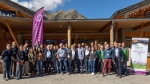
From 16 to 18 September, some sixty representatives of Alpine Protected Areas from all alpine countries celebrated the 25th anniversary of the ALPARC network in Le Monêtier-les-Bains (France).
Founded in 1995, the Alpine Network of Protected Areas has been involved for a quarter of a century in the implementation of the protocol "Nature protection and landscape maintenance" of the Alpine Convention. Due to the Covid19 pandemic, it was therefore with a little delay that the actors of the network celebrated this anniversary within the Ecrins National Park, host of the ALPARC premises at the very beginning of the network. The joy of finally meeting in-person again was all the stronger, after more than a year of digitalised international cooperation. For the occasion, all the Alpine countries were represented, and the event was rich in international dialogues during both the workshops and the excursions in the heart of the park.
Thematic exchanges focused on current topics of international cooperation. Alenka SMERKOLJ, Secretary General of the Alpine Convention and Isabelle Paillet, French Focal Point of the Convention recalled the unique and strong bond which links ALPARC and the Alpine Convention. The ALPARC team presented a brief history of the network's activity, highlighting the importance of Protected Areas in the Alps and calling for more biodiversity protection especially through the realisation of an ecological network across the mountain range. Thematic workshops completed the exchanges between protected area managers: A first one dealt with current challenges of parks as key players in mitigation and adaptation strategies towards climate change and biodiversity loss. A second one illustrated challenges and opportunities that health tourism represents in the sustainable development policies carried out by the Alpine Protected Areas. In this context, the Interreg HEALPS2 project was presented to the participants, as well as concrete examples set up in alpine parks.
Beyond speeches only, it is on the ground that the actions of the parks are visible. Therefore, several excursions were integrated into the program of these festivities. Saturday was the occasion of a long and magnificent hike in the heart of the Ecrins National Park, the highest alpine park. An occasion as well to observe at the Arsine glacier the terrifying speed of global warming in the alpine environment. Participants had the pleasure of exchanging news from all around the Alps during the traditional Alpine buffet and the official dinner for the 25th years anniversary offered by the Les Ecrins National Park.
Invited to celebrate the event, Mrs. Bérangère Abba, Secretary of State for Biodiversity was partially present during the event and an official ALPARC delegation could converse with her and the Secretary General of the Alpine Convention about the most urgent issues in biodiversity protection stressing the message that only together and ecologically inter-connected, do the protected areas of the Alpine arch have the potential for the conservation of the natural heritage for generations to come.
ALPARC, the alpine network of protected areas thanks very much the Les Ecrins National Park, its director and staff for their strong involvement in the organisation of the event as well as all participants and supporters having been present.
PHOTO: ©Thierry Maillet - Parc national des Ecrins
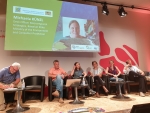
On September 8th, ALPARC and EUSALP Action Group 7 (AG7) co-organised a session at the IUCN World Congress, entitled "Connecting protected areas and beyond to safeguard mountainous ecosystem services and adapt to climate change - An intergenerational dialogue". This joint session brought together experts from various Alpine countries and beyond, as well as four young professionals from fields as varied as research, forestry and environmental education. As symbols of the future, these young professionals came to share their expectations, hopes and solutions to strengthen ecological connectivity in the Alps.
Together, ALPARC, AG7, the Swiss National Park and several witnesses called for more protected areas with a high level of protection - at all altitudes - and above all for greater connectivity between these areas. Ecological connectivity provides a solution to the growing fragmentation of the Mountain space and especially as an adaptation strategy to keep biodiversity and to adapt to climate change. It plays a central role in ecosystem functioning, which is why ALPARC, the Alpine Convention, EUSALP and many others are now cooperating on this topic.
The speakers also called for integrating ecological connectivity into all spatial planning instruments at all scales (local to international) by using an multistakeholder and inter-disciplinary approach. The young professionals have a key role to play in implementing such a territorial planning strategy and projects like OpenSpaceAlps are essential to maintain open spaces as part of Alpine green infrastructure (GI).
The event was followed by dozens of attendees both on site and online, thanks to a live broadcast. A significant amount of time was devoted to the questions raised by the attendees.
Beyond the sole topic of ecological connectivity, this session was the opportunity to offer worldwide visibility to the Alpine territory and mountain environment in general, and to stress out the many challenges it is currently facing. As providers of crucial ecosystem goods and services, mountains are essential for global sustainable development.
Furthermore, the intergenerational dialogue initiated is intended to continue beyond the congress, to work out solution to these challenges all together.
Read more:
To enable transnational exchange and learning on spatial planning and territorial development in the Alpine Space, the Academy for Territorial Development in the Leibniz Association (ARL), the Interreg Alpine Space project OpenSpaceAlps and the Bavarian Ministry of Economic Affairs, Regional Development and Energy; Department of Regional Planning (StMWi) are jointly hosting an international conference, entitled: “Towards sustainable spatial development – transnational lessons on the safeguarding of open spaces and the reduction of land take”.
The event will be held on 19 and 20 October 2021 at AlpenCongress in Berchtesgaden (Germany).
The goals of the conference are:
The conference is planned as a presence event in Berchtesgaden in compliance with the required health, hygiene and distance measures. Given the ever dynamic development of the Corona pandemic, we reserve the right to adapt the event format if necessary.
The registration is open until the 30 September 2021. All information incl. the agenda and the registration form is available from the ARL event website.
For any questions about the AlpPlan network and its activities:
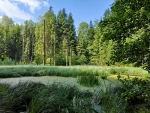
After four years of candidacy, the Jorat Nature Park, which is entirely located on the city of Lausanne’s territory, has been certified by the Swiss Confederation in 2021, thus becoming the second peri-urban nature park on a national scale. With its more than 40 km2, the Jorat forest, mostly composed of beech forest, is the largest forest on the Swiss Plateau. Its core zone, which will be a natural forest reserve, is a territory of 4.4 km2 allowing the preservation of the existing natural heritage while creating favorable conditions for the evolution of biodiversity. On the decline in lowland forests, this biodiversity includes species dependent on old or dead wood. These species represent about 25% of the forest fauna and flora, essential to the natural cycle of the forest.
Photo: © Parc naturel du Jorat

Bringing voices of young professionals in the front of the conversation stage has long been part of ALPARC approach. The IUCN session is living proof of this commitment. In the same vein, we are very pleased to share the recent implementation of a new digital entry point that has been developed by EUSALP Action Group 7 and youth.shaping.EUSALP. Aimed for young professionals, this digital tool serves as an open platform where they can submit project ideas, proposals and suggestions for the sustainable development of the Alps. The password for the digital entry point is: Eusalp2021
ACCESS THE ENTRY POINT: https://eusalp-youth.eu/home-digital-entry-point/
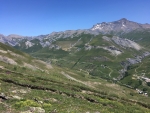
On September 7th, ALPARC and EUSALP Action Group 7 (AG7) will hold a common session at the IUCN World Conservation Congress.
The IUCN World Conservation Congress has grown to be the world’s largest and most democratic recurring conservation event in the world, bringing the expertise and influence of its powerful membership to bear on the most pressing issues of the time. The 2021 edition is scheduled in Marseilles, from September 3rd to September 11th. The Congress’ Forum is the largest knowledge marketplace for conservation and sustainable development science, practice and innovation. It is open to the public and a great place to learn, share, network and influence.
In this context, ALPARC and AG7 will be presenting an onsite & livestreamed session, titled: “Connecting protected areas and beyond to safeguard mountainous ecosystem services and adapt to climate change - An intergenerational dialogue”.
This session will bring forward a constructive dialogue between young professionals and senior conservation experts, sharing viewpoints on how nature conservation issues should be best addressed regarding the current challenges like climate change and biodiversity loss.
MORE INFORMATION: HERE
A series of webinars organized by the Ossola Protected Areas Managing Authority has brought participants to learn more about the many facets of health and wellness tourism.
The Alps are an area naturally suited to health and wellbeing, thanks to natural resources that can be exploited for tourism purposes with a specific focus on health. To explore these issues, within the framework of the Interreg Alpine Space project HEALPS2, the Ossola Protected Areas Management Authority have organised 5 webinars, each of which addressed a different aspect tourism in the mountains can leverage in order to evolve and build new health and well-being value chains.
The topics addressed were regenerative tourism, the role local, sustainably produced game meat can have both on health and tourism, the potential of mountain therapy and of accessible tourism for tourist operators and on the relationship between mountain sports and respect for the environment.
The webinars took place every Monday from 10 May to 7 June and were conducted by Stefania Cerutti, Director of the UPONTOURISM Interdepartmental Centre of the University of Eastern Piedmont, accompanied by expert guests. Each webinar had 70 participants on average, 48 of which participated in all the webinars. 60 new contacts asked to be added to the Ossola Protected Areas mailing list, through which the news about the HEALPS2 project are also shared.

Ordinance enters into force on Wednesday, 30 June 2021 – limited to five years for the time being
The so-called Infinity pool above the Königssee in the course of the Königsbach has become a world-famous visitor magnet. This development has increasingly endangered the soil, flora and fauna in the Berchtesgaden National Park. Therefore, after a close examination, the decision has now been made to close the area around the Gumpen for five years. This is to give nature time to recover. The regulation has entered into force on Wednesday, June 30, 2021.
With its special view on parts of the Königssee, the Gumpen in the Königsbach waterfall forms an attractive excursion destination in the Berchtesgaden National Park. While the Gumpen used to be an insider tip, in recent years they have become a tourist attraction, especially among the younger generation. In particular, the so-called infinity pool in the upper part of the waterfall cascade achieved great popularity far beyond the region via numerous posts in the social networks in a short time. The media attention inevitably led to a massive increase in visitor numbers.
Only two small paths formed the traditional access to the area around the Gumpen, which was previously only used to a small extent by locals. Due to the rapid spread in social media and on outdoor platforms, these paths are now known to a worldwide public, the number of visitors has multiplied significantly. A survey from the summer of 2020 showed an average number of about 150 visitors per day on weekends, but far more than 350 on peak days.
As a result, in recent summers, a wide-ranging network of trails with a length of at least three kilometers has newly formed. As a result, the entire area is massively disturbed – the individual paths that converge again and again are sometimes over several meters wide. Especially in the immediate area of the Gumpen, the topsoil is massively damaged due to the high visitor frequency. Due to the destruction of the vegetation, the topsoil lies free in the steep slopes and is further eroded by the mechanical load and the onset of water erosion. In many places, the fine roots of the surrounding trees are exposed over a large area.
Numerous animal species, including strictly protected bird species, are also significantly disturbed by the massive flow of visitors.
The ordinance, which the Berchtesgadener Land District Office has issued is intended to contribute to the recovery of vegetation over the next five years as a building block in the context of visitor guidance, as well as to support the closure of the soil wounds by natural succession.
The purpose of the Berchtesgaden National Park is to protect nature. The development of the area for the population for educational and recreational purposes is always subject to the protection of nature. The prohibition to enter the areas specified in the map (annex) is, in view of the circumstances, a necessary measure to prevent further impairments. The area mainly includes those areas that are damaged by the newly created trampling paths. In total, it is about 10 ha of the area of the Berchtesgaden National Park, which covers a total area of more than 20,000 ha.
A seasonal interruption of the ban, for example for the winter months, would counteract the successes of the summer closure. Due to the often humid weather during this time, even a few visitors would be sufficient to destroy the delicately developed ground vegetation over the summer and cause corresponding (step) damage.
The ordinance of the District Office is initially planned for a period of five years. This period may be sufficient for the vegetation to recover and for the soil wounds to close. The time is used by the National Park Administration to evaluate the development. If it turns out that five years is not enough or that visitor pressure is back to the level it has been in the recent past, a further closure after the next five years cannot be ruled out.
Appeals to the reasonableness of the visitors and for a voluntary renunciation to enter this area have unfortunately had no effect in the past. With the ban that came into force, It is now possible to punish violations as an administrative offense. The rangers of the Berchtesgaden National Park carry out the on-site inspections and report violations to the Berchtesgadener Land District Office. There, the further processing of the fine procedure takes place.
For the Berchtesgadener Land District Office and the Berchtesgaden National Park, the closure is the last resort. Both authorities hope that this now unavoidable measure will enable nature to recover from the heavy burden of recent years. In addition, visitors and nature users, especially from the field of new media, should also be sensitized to the needs of the plant and animal world in the national park and an awareness of their protection should be awakened. This hope is also reflected in the limitation of the regulation for the next five years.
Full press release & contacts (in German): HERE
Photo: National Park employees put up the signs to close the vegetation protection area in the area (Credit: Nationalpark Berchtesgaden)
The Mercantour National Park has been severely affected by storm Alex. More than 60 km of the Park's trails are impassable and now require major repair work.
These trails are the link between the Mercantour and all those who live and work there. They are also synonymous with safety, the preservation of nature and the dynamism of tourism and the economy in the valleys. Responsible for the management of these trails, the National Park has set itself the goal of carrying out the identified work, estimated at 3.5 million euros, over three years. The works will contribute to several objectives: to allow the Park's teams to carry out their protection mission, to allow the inhabitants to reconnect with their territory and to allow nature lovers to rediscover their link with this extraordinary space.
Faced with the scale of the restoration costs, the park is appealing to all goodwill and to all those who are attached to the Mercantour and whose mobilisation can make a difference. This is why the park is launching its first fundraising campaign on the KissKissBankBank platform. The success of this campaign depends on the mobilization of everyone. The following link can be used to contribute directly or share the campaign: https://bit.ly/3hdoHIa
Picture: © Mercantour National Park
The crisis of the regional park of Valsesia in Piemonte led Federparchi's President Giampiero Sammuri and its vice president Agostino Agostinelli take a clear position regarding the present situation of regional parks in Italy:
"The crisis of the regional park of Valsesia, is an indicator of the serious state of malaise of many regional parks throughout Italy, many of which, despite their enormous wealth of biodiversity and naturalistic treasures, have severe financial and organizational difficulties. We believe that, in the face of legitimate criticisms advanced by the Community of the park in a letter sent to the Region, an intervention is needed. This intervention shall start from a careful analysis of the causes for the "serious inactivity", to the identification of possible solutions while implying the financial endowments by the Region that allow an effective and efficient management of the Entity.
The decision to "close the park" would be a misleading solution, worse than the non-activity that is reported and could have serious repercussions on nature protection.
The presidents are sure that the dialogue with all concerned stakeholders, the institutional ones but also association and territorial agents, allows for a new phase which will relaunch the Valsesia - Alta Valle Park Strona. This precious common good needs to be safeguarded for the conservation of its wonders of nature."
See original article (in Italian): https://bit.ly/3jsLPE3
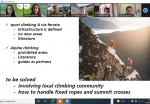
In the past week we have been pleased to hold two new workshops for our members. These online meetings addressed the Working Groups within the network, in regards to two of our tfields of work: “Regional Development and quality of life” and “Education for sustainable development in the Alps”.
On June 18th, the first workshop was focusing on visitor management, challenges and opportunities for Alpine protected areas in view of future common activities at the Alpine level. Thus, the objective was to identify existing best practices for visitor management in different parks and common difficulties against the background of the increased post-Covid pressure on sensitive ecosystems. In this context, we also had the opportunity to discuss a concrete project proposal targeting joint actions at the international level.
On June 24th, the second workshop was aiming to foster exchange on the different education activities for this year’s summer and autumn season, and have a look at any new projects or initiatives which you would like to share with the other educators. It has been very inspiring to see how everyone is being highly creative to deal with the pandemic situation and to keep offering a large variety of Education Activities. The workshop also gave us the occasion to share updates on the upcoming 7th edition of Youth at the Top.
We would like to sincerely thank all the participants to these workshops. The valuable inputs from Protected Areas all across the Alps and the rich discussions that ensued, were living proof of the importance of international cooperation as we cherish it.