
Le Réseau Alpin des Espaces Protégés
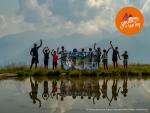
Registration for Youth at the Top 2025 is now open! Click here to register your local event – registration is possible until April 30, 2025.
The 11th edition of Youth at the Top will take place on July 17 and 18, 2025 (or adapted to local conditions within the week of July 14–20, 2025) across various protected areas in the Alps and Carpathians. Kids and teens are invited to participate in local events as part of this international initiative.
This event is a great opportunity to raise awareness about nature conservation and preservation among young people. The 2025 edition focuses on the common theme "Our Footprints in the Alps", encouraging participants to explore the different impacts humans have on the Alpine environment.
For more information about the event's organization, please refer to the project sheet.
© Emanuele Rotta, Parco naturale delle Orobie Valtellinesi
ALPARC CENTR’ALPS is looking for a Network Manager for its office in Berchtesgaden (Germany/Bavaria).
For more information visit the dedicated webpage: Vacancies
Deadline for applications: 28th of March 2025 / 2 PM (CET)
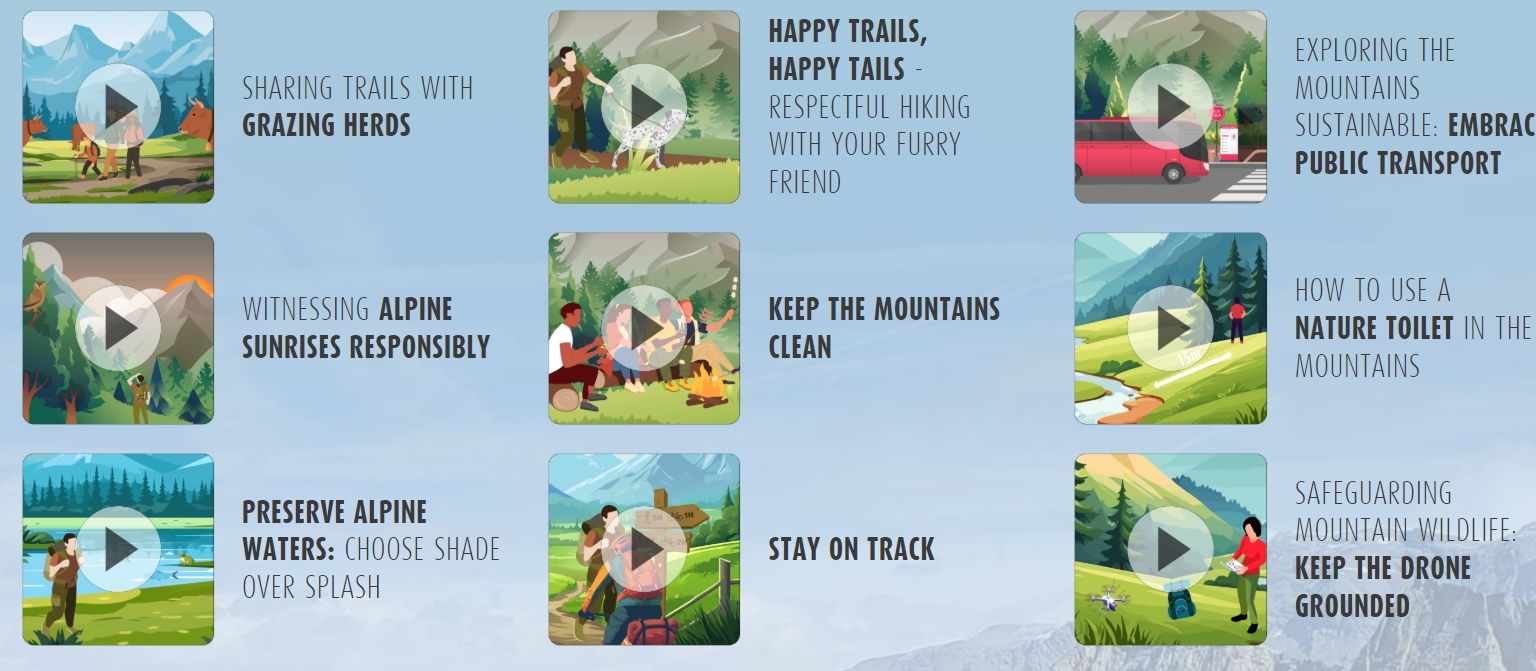
ALPARC has created a series of short videos as part of the Be Part of the Mountain initiative, showcasing best practices and key topics related to responsible behavior in the mountains. These engaging videos use dynamic visuals and brief texts to illustrate essential guidelines, such as how to behave around grazing animals or the benefits of using public transport to access mountain areas.
Available in all Alpine languages as well as English, the videos can be used for social media, websites, or educational activities and are accessible to all members of the initiative. Click here to watch all videos (Section 3 - Good Practices).
If you would like to use the videos to raise awareness, you can gain access through this form.
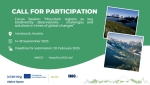
The AlpsLife project consortium will actively participate in the International Mountain Conference (IMC2025), held in Innsbruck, Austria, from 14 to 18 September 2025.
The conference is currently open for abstract submissions, and the AlpsLife consortium invites interested stakeholders to submit contributions for its focus session: Mountain regions as key biodiversity observatories – challenges and solutions in times of global changes (FS 3.149).
The IMC is the largest conference on mountain research, fostering cross-disciplinary exchange and prioritizing synthesis for a holistic understanding of mountain systems. This session will explore how mountain regions can improve biodiversity monitoring to address global changes, focusing on innovative methods like remote sensing and community-based approaches.
Don’t miss your chance to contribute to this impactful discussion!
To submit an abstract, please connect to the following webpage: IMC25 Submission of Abstracts
Application Deadline: 20 February 2025, 16:00 UTC.
More information about the session: FS 3.149 - Mountain regions as key biodiversity observatories?
For more information about the project: https://www.alpine-space.eu/project/alpslife/
The AlpsLife project is co-funded by the European Union through the Interreg Alpine Space programme, which supports cross-border cooperation projects between seven Alpine countries.
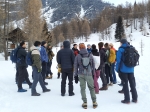
Managing outdoor activities to minimize visitors’ impact on biodiversity: that was the focus of the first pilot site visit of the LiveAlpsNature project (Interreg Alpine Space), hosted by Aree Protette dell’Ossola in Crodo (IT), from February 5th to 7th, 2025.
Director Daniele Piazza and park ranger Radames Bionda presented how wildlife and visitor monitoring serve as the basis for concrete conservation measures. Through field observations, surveys, and spatial analysis, the park established specific quiet zones and regulations, aimed at protecting species particularly sensitive to human presence, such as the black grouse and the rock ptarmigan. Park rangers Marco Rughetti, Dario Gisotti and Luca Martignoni then guided the participants on an excursion across Alpe Devero to Crampiolo. This allowed the group to observe firsthand the park’s actions within both its borders and the nearby Natura 2000 site.
The rangers gave an overview of the main outdoor activities carried out in the protected area and its buffer zone. They explained, for example, how the presence of a small ski lift and the relief conformation particularly suitable for ski mountaineering encourage off-piste descents in areas where these birds build their snow shelters. To avoid human-related disturbance, the park has demarcated winter quiet zones and suggested specific routes for skiers, adopting targeted communication across various media. Practitioners are informed through various media, including open maps and tracks, and panels displaying the park regulations and the behavioural recommendations promoted by the Be Part of the Mountain initiative.
Surrounded by a stunning snow-covered landscape, participants shared experiences from different protected areas and countries, while considering opportunities for future cooperation. Throughout the meeting, ongoing project activities were discussed. Thanks to the partnership's diverse expertise, plenty of valuable input was collected to help shape the next steps of LiveAlpsNature.
It was a pleasure to reconnect, work together, discover the Ossola protected areas and, of course, enjoy Italian cuisine!
For more information about the project: https://www.alpine-space.eu/project/livealpsnature/
The LiveAlpsNature project is co-funded by the European Union through the Interreg Alpine Space programme, which supports cross-border cooperation projects between seven Alpine countries.
© photo: Pietro Merzi / ALPARC
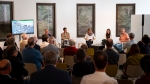
Among the seven nature parks, the Sciliar-Catinaccio Nature Park is the oldest in the province of South Tyrol/Italy. On 16 September 1974, the foundation for this first nature park in South Tyrol was laid by decree of the Governor of South Tyrol. In 2003, the Sciliar Nature Park was expanded to include the Catinaccio and expanded to the Sciliar-Catinaccio Nature Park with a total area of almost 7300 hectares. Since 1995, the nature park has been part of the Europe-wide Natura 2000 protected area, which also protects biodiversity. In 2009 - as part of the Dolomites - the UNESCO World Heritage Award was added.
During a conference on 27.9.2024 on the occasion of the anniversary at the Sciliar-Catinaccio Nature Park House in Siusi, Governor Arno Kompatscher praised the decision 50 years ago to designate the area as a nature park as forward-looking and also courageous. From the initial scepticism of the farming population, the attitude towards the protected area has turned positive over the decades. The challenge is to balance the interests between protecting and using. The head of the nature park, Enrico Brutti, who has been in charge since 1993, on the other hand, called for joint ways to preserve the incomparable landscape and counter the effects of over-tourism.
Solutions for tourist use
The challenges for the future using the example of tourism were also the focus of the subsequent round table: Helmut Mitterstieler, President of Alpe di Siusi Marketing, explained the development of tourism in the nature park region. Photographer and filmmaker Matteo Agreiter spoke about the power of images. "In order for the protected areas to continue to fulfil their protection mandate, solutions are urgently needed to the sometimes escalating tourism," emphasised Guido Plassmann, Director of the Alpine Network of Protected Areas. The aim is to "get to the heart of the journey," explained tourism expert Elide Mussner, "and to reconcile economic and social needs and thus promote the common good."
Finally, Leo Hilpold, Director of the Provincial Office for Nature, explained that the homework of the EU Strategy 2030 must be done within 2030 and that the missing approximately seven percent protected area, i.e. about 40,000 hectares, in South Tyrol still has to be designated. The knowledge and experience of the past 50 years in the protected area are of great use for this purpose.
© Image: Fabio Brucculeri

The 11th edition of Youth at the Top will take place on July 17 and 18 2025 (resp. flexible in the week from 14 July 2025 to 20 July 2025), throughout several Alpine and Carpathian protected areas and natural sites. Kids and teens are invited to join local events to take part in this international initiative. The event is the opportunity to raise awareness on nature conservation and preservation among the youngests.
Click here to register your local event - registration is possible until April 30, 2025!
The event is focusing on the common theme "Our footprints in the Alps". It invites the young participants to explore different impacts humans have on the Alpine environment. Participants can dive into topics like the effects of outdoor activities on nature and wildlife or explore how human-induced climate change is transforming the Alps – impacting glaciers and permafrost as well as flora and fauna. There is also an opportunity to learn about the cultural landscape of the Alps, focusing on traditional pasture farming and land maintenance that have shaped the region for centuries. Organizers are encouraged to select their own focus areas, offering many more opportunities to explore how we interact with and shape the mountains.
|

Mauro Fissore Dear colleagues of the alpine protected areas, Dear friends, We are writing to you today with a very sad message. Our colleague and dear friend Mauro Fissore from the Parco naturale Alpi Marittime passed away unexpectedly some days ago. Mauro was not just an outstanding person and colleague, a friend to many of us; he was also the soul of the Memorial Danilo Re. Many of you knew him personally, many have participated for 20 years and more in the Danilo Re Memorial competitions. His name is inextricably linked to the Memorial event he created almost 30 years ago in memory of his colleague Danilo – now the sad truth is, that he joined definitely his colleague and friend of those days. Mauro was extraordinary in his kindness, his openness for all new things, his dedication for nature protection and his always radiant presence that conveyed happiness, sincerity and friendship. He was a great artist and his concerts during the Saturday night of the Memorial are legendary. Now the story of the Memorial must and will go on, but it will never be the same. Nothing and no one can replace Mauro, but we will do our best to carry on in his spirit and generosity. Mauro was a symbol and a driving force of alpine friendship and cooperation among alpine rangers. This friendship will endure, and alpine rangers, along with all the other colleagues from the Alpine protected areas will continue to work together for the Alps. In memory of Mauro, The ALPARC President, Director and Team Chambéry, July 11th 2024 |
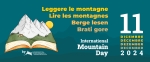
The Reading Mountains Festival is a way to connect people who love books and mountains, even if they are physically apart. Book lovers and authors, mountaineers and artists throughout the Alps (and beyond) have a chance to discuss similar issues and evaluate the meaning, impact, and purpose of Alpine literature.
"Reading Mountains" was first launched to celebrate International Mountain Day in 2015. The idea is to initiate events dedicated to mountains and literature in various places around the Alps on International Mountain Day, declared by the United Nations and celebrated on 11 December every year.
The Reading Mountains Festival encourages the celebration of cultural differences and similarities in the Alps and, at the same time, connects mountains and culture. Partners organising various events in the scope of the festival are provided with posters, bookmarks, and stickers that they can use for the promotion of their event(s).
If you have any questions, please contact reading.mountains@alpconv.org.

The year 2024 is a major milestone for Triglav National Park, the Julian Alps region, and nature conservation in Slovenia. The early initiatives aimed at protecting natural landmarks, launched in the second half of the 19th century, were a spontaneous response to the increasing threats to the environment posed by human activities after the Industrial Revolution.
The first efforts to protect part of the Julian Alps, dating back to 1906, stemmed from the ideas of seismologist and naturalist Albin Belar. On 4 April 1924, on the initiative of the Nature Conservation and Natural Monuments Protection Department operating within the Museum Society of Slovenia, the Ministry of Forests and Mines in the Belgrade-based government of the Kingdom of Serbs, Croats and Slovenes, approved the designation and protection of an area of approximately 1,400 hectares in the Triglav Lakes Valley. At the time, the estates of the Carniolan Religious Fund were under state administration, and this made it possible for the area’s managing authority, i.e. the Forest Directorate in Ljubljana, and the two park initiators, namely the Museum Society of Slovenia and the Slovenian Mountaineering Society, to conclude a lease agreement.
Following the signing of the agreement, the Alpine Conservation Park was established on 1 July 1924. This milestone marks the first legal protection regime aimed at preserving nature to be established in Slovenia.The lease term was 20 years, until 1 July 1944. The annual lease fee was set, park boundaries were marked, and a list of cadastral parcels making up the park was compiled. The designation was temporary since the laws at the time did not allow grazing areas to be permanently removed from commercial use. The Alpine Conservation Park covered 1,400 hectares.
In 1961, the Triglav Lakes Valley was declared a "Triglav National Park" with an area of 2,000 hectares, and in 1981 the Triglav National Park Act was adopted, resulting in today's Triglav National Park, which covers almost 84,000 hectares, or four percent of Slovenia's territory.
An article focusing on the development and application of the Continuum Suitability Index (CSI) for assessing ecological connectivity has recently been published. Over the past decade, ecological connectivity has gained significant attention in policy agendas, particularly in the European transnational context. This article examines the methodologies used to improve structural ecological connectivity and landscape permeability, with a particular focus on the CSI.
The CSI takes into account various anthropogenic factors affecting ecosystems and has been adopted by numerous international and national projects to assess terrestrial landscape permeability at the macro-regional scale. The article discusses the conceptual aspects of the CSI methodology, incorporating findings from a comprehensive literature review and expert workshops. It also examines the results of the application of the CSI in three projects in the Alps and the Dinaric Mountains.
Five key factors - land use, population pressure, landscape fragmentation, environmental protection and topography - are identified as crucial for analysing landscape permeability. The article shows that population pressure has the highest sensitivity in the CSI results, while landscape fragmentation has the least influence. In particular, the environmental protection indicator emerges as the most significant factor when compared with data on the presence of red-listed species.
In addition, the research shows that the level of detail and data sources used have minimal impact on the CSI results, underlining the adaptability and robustness of the tool. This new publication highlights the considerable potential of the CSI as a versatile and straightforward tool for an initial assessment of ecological connectivity at a macro-regional scale.

The Bioclimate initiative, promoted by the Region of Lombardy, was born within the framework of the LIFE GESTIRE 2020 project, with the aim of creating models of public funding that can act as a catalyst for investment in projects to conserve biodiversity and adapt to climate change in the forests and protected areas of Lombardy.
The Orobie Valtellinesi Park has decided to participate in the Bioclimate initiative with the idea of planning direct interventions in the habitats of the Capercaillie (Tetrao urogallus), one of the Alpine species with the greatest conservation problems and the symbol of the Park. Population groups, particularly in Lombardy, are showing a gradual decrease in the presence of the Tetrao, and therefore the species needs direct intervention on the territory to ensure its conservation and maintain the biodiversity of mountain ecosystems.
Two parallel projects of interest to different municipalities have been developed: the Municipality of Teglio and the Municipality of Forcola (Province of Sondrio), both of which have recently been subject to a new forest plan that includes interventions aimed at conserving the habitats of the Capercaillie, with the aim of affecting two different areas of the Park from a geographical point of view.
The project is divided into forestry measures to improve the structure of the forest with a view to protecting wildlife on a total of 187 hectares. Biodiversity protection measures are planned, including the maintenance or restoration of clearings and other important ecotonal elements, in order to achieve a high level of specific biodiversity.
The implementation of management plans for Natura 2000 sites, the creation of a recreational tourist route and the construction of infrastructure for the use of natural sites are also planned in order to disseminate the value of biodiversity.
An important intervention of the project is the commitment of the Park to certify the intervention areas according to the FSC standard for forest management and enhancement of ecosystem services, with the support of Etifor, a consultancy and spin-off company of the University of Padua. The aim of FSC certification is to guarantee the traceability of forest products in order to ensure proper management and the achievement of environmental, social and economic benefits.
The work on the forest will take place in the summer/autumn of 2024 and must be completed by the end of this year.